Prof. Karl R. Gegenfurtner
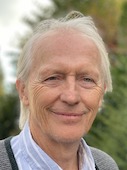
Giessen University
Department of Psychology
Alter Steinbacher Weg 38
35394 Giessen (Germany)
- Phone:
- +49 641 99 26 100
- Fax:
- +49 641 99 26 119
- E-Mail:
- gegenfurtner@uni-giessen.de
- Office:
- Room 320, Building F1
The emphasis of my current research is on information processing in the visual system. Specifically, I am concerned with the relationship between low level sensory processes, higher level visual cognition, and sensorimotor integration.
My goal is to answer the question how complex scenes and objects are perceived in a natural environment, how they are represented in the brain, and how the visual information is used to drive the motor system.
Selected Publications
Title:
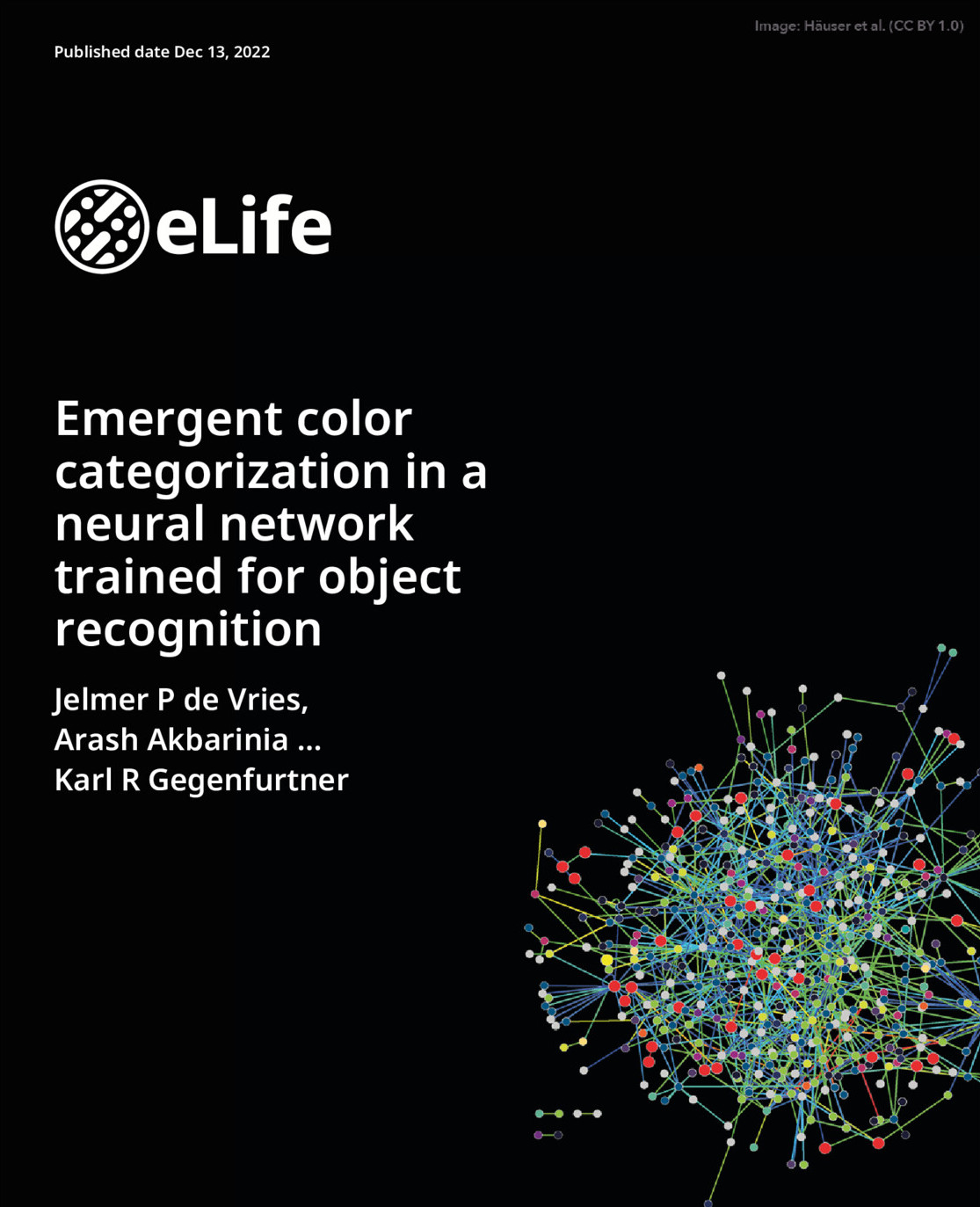
Emergent color categorization in a neural network trained for object recognition.
Read the paper
Visit the publication
Title:
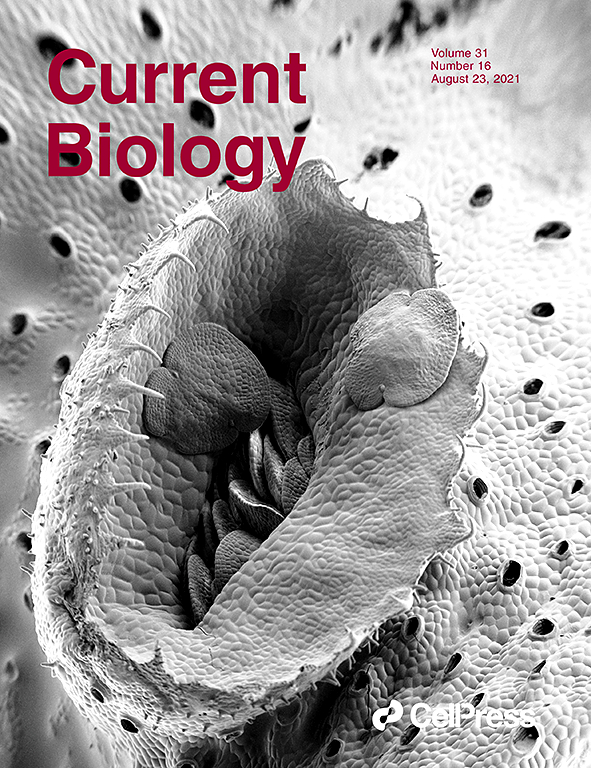
The role of color in the perception of three-dimensional shape.
Read the paper
Visit the publication
Title:
Ice hockey spectators use contextual cues to guide predictive eye movements.
Read the paper
Visit the publication
Title:
Individual differences in visual salience vary along semantic dimensions
Read the paper
Visit the publication
Title:
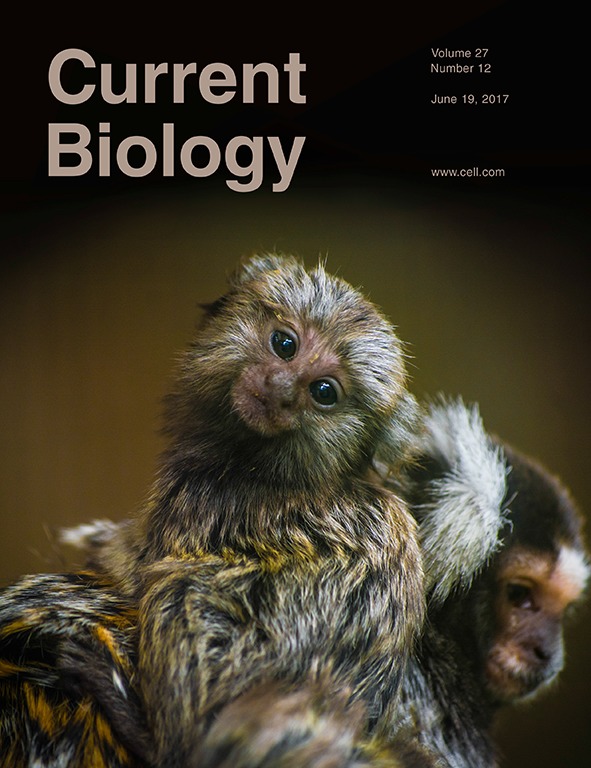
Execution of saccadic eye movements affects speed perception
Read the paper
Visit the publication
Title:
Dynamic re-calibration of perceived size in fovea and periphery through predictable size changes
Read the paper
Visit the publication
Title:
Selection of visual information for lightness judgements by eye movements
Read the paper
Visit the publication
Title:
Optimal sampling of visual information for lightness judgments
Read the paper
Visit the publication
Title:
Dynamic integration of information about salience and value for saccadic eye movements
Read the paper
Visit the publication
Title:
Visual Processing, Learning and Feedback in the Primate Eye Movement System
Read the paper
Visit the publication
Title:
Improved visual sensitivity during smooth pursuit eye movements
Read the paper
Visit the publication
Title:
Neuronal processing delays are compensated in the sensorimotor branch of the visual system
Read the paper
Visit the publication
Title:
Sensory and cognitive contributions of color to the perception of natural scenes
Read the paper
Visit the publication
Title:
Grasping Visual Illusions: No Evidence for a Dissociation Between Perception and Action
Read the paper
Visit the publication
Title:
Interactions between color and motion in the visual pathways
Read the paper
Visit the publication
Title:
Contrast dependence of colour and luminance motion mechanisms in human vision
Read the paper
Visit the publication
Curriculum Vitae
1981 – 1986:
Psychology Student at the University of Regensburg, Diploma in Psychology, 1986
Visit J. Drösler
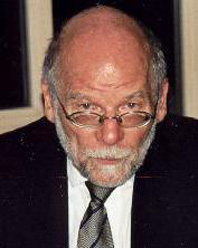
1986 – 1990:
Ph.D. in Experimental Psychology, New York University, New York
Visit G. Sperling
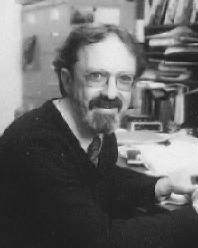
1986 – 1990:
Ph.D. in Experimental Psychology, New York University, New York
Visit J. Krauskopf
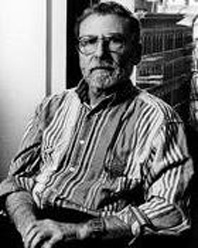
1990 – 1993:
Postdoc at the Howard Hughes Medical Institute and at the Center for Neural Science of the New York University
Visit J. Movshon
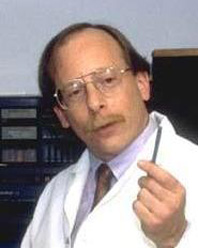
1993 – 2000:
Research scientist at the MPI for Biological Cybernetics in Tübingen 1998: Habilitation for Medical Psychology and Behavioral Neurobiology
Visit H. Büthoff
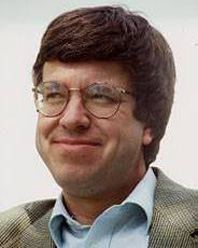
2000 – 2001:
Professor for Biological Psychology at the Otto-von-Guericke University Magdeburg
Visit OVGU

Since 2001:
Professor for General Psychology at the Justus-Liebig-University Giessen
Visit JLU
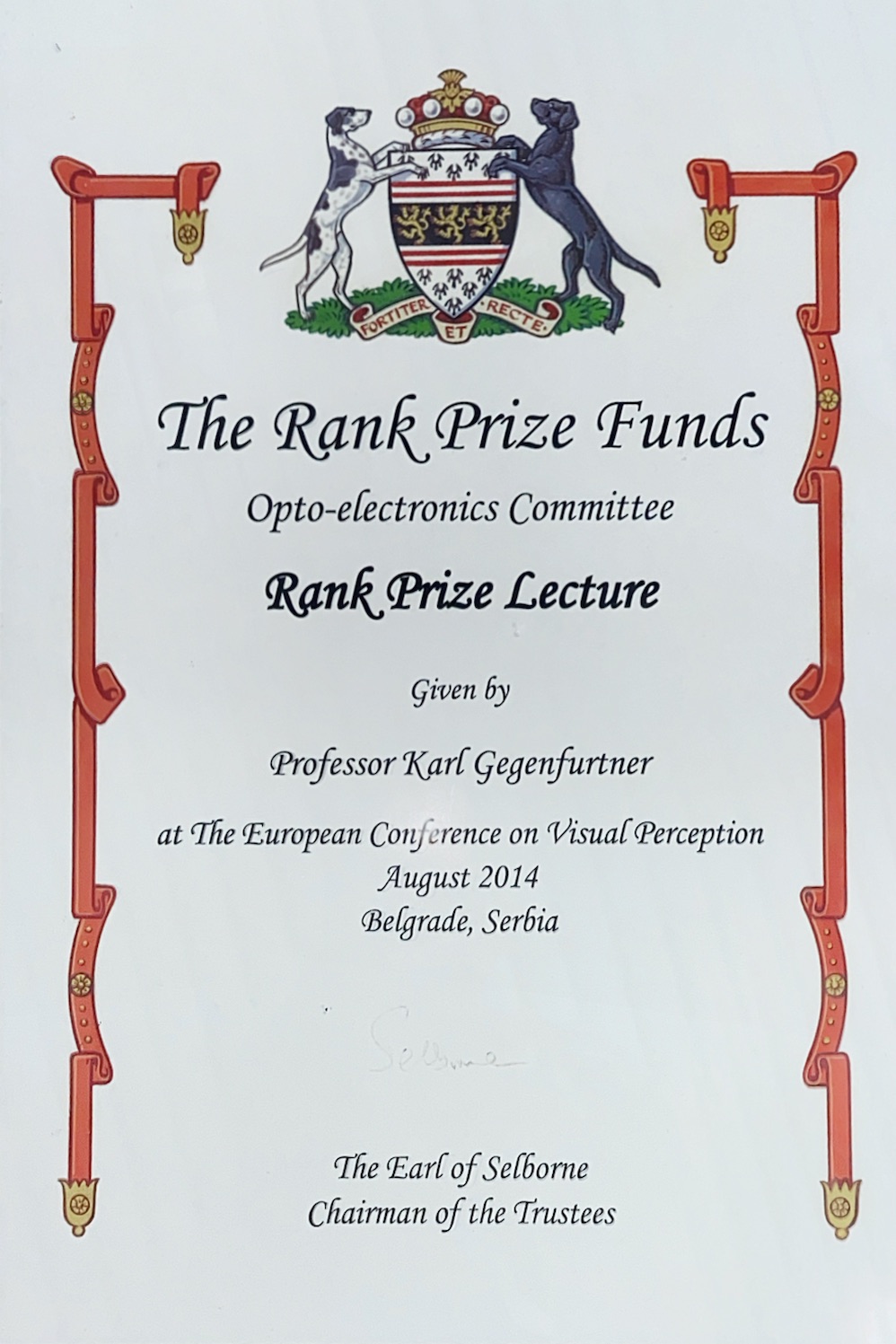
2014
Rank Prize Funds Lecture at the European Conference of Visual Perception 2014
Visit Publication
Since 2015
Member, German National Academy of Science (Leopoldina) Deputy senator since 2017
Visit Leopoldina
2016
Wilhelm Wundt medal of the German Society for Psychology (DGPS)
See press release
since 2017
Member of the Wilhelm Wundt society
Visit Wilhelm Wundt Society
2019
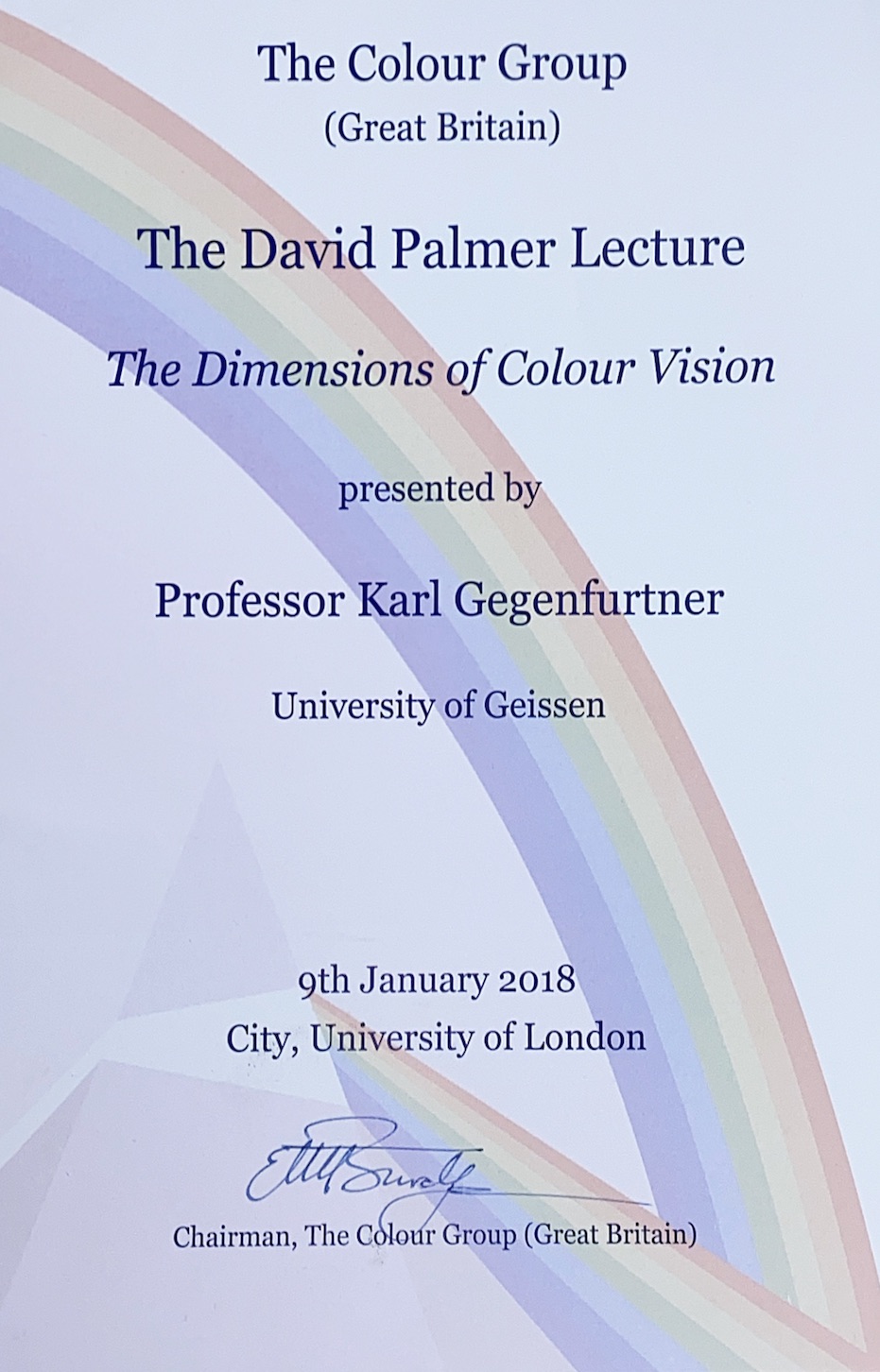
Palmer Lecture of the Colour Group (GB)
Visit Colour Group (GB)
2019
Turrell Lecture Berlin
See Luther's Light
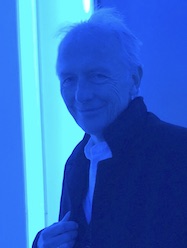
2024
Russell Devalois Memorial lecture UC Berkeley
UC Berkeley


2024
Pineapple Science Award
Pineapple Science Award Ceremony

Services
Editorial board Journal Physiology (2002-2009)
Visit the journal
Editorial board Vision Research (2007-2018)
Visit the journal
Editorial board Visual Neuroscience (2008-2013)
Visit the journal
Editorial board Journal of Vision (since 2009), Associate editor (since 2018)
Visit the journal
Editorial board Perception (2009-2018)
Visit the journal
Psychological Research (2010-2014)
Visit the journal
2010-2014: Board of Directors Vision Science Society, President 2012/2013
Visit VSS
Psychological Review (2015-2020)
Visit the journal
2016-: Fellowship selection committee Alexander von Humboldt-Foundation
Visit AvH
2021-2023: Member, Henriette Hertz scouting program, Alexander von Humboldt-Foundation
Visit AvH
Funding
2020 – 2025:
ERC Advanced Grant – Color 3.0: an object-oriented approach to color
More Information

2014 – 2021:
DFG-SFB/TRR 135 – Cardinal mechanisms of perception: Prediction, Valuation, Categorization
More Information
2013 – 2022
International Research Training Group (DFG-IRTG 1901): The Brain in Action – BrainAct
More Information
2017 – 2022:
Dynamics in vision and touch
More Information

2012 – 2016:
Perceptual representation of illumination, shape and material (EU) Partner Marie-Curie Initial Training Network
More Information
2010 – 2013:
Mesopic Vision (DFG)
2009 – 2014:
Perception of material properties (DFG Reinhart Koselleck-Projekt)

2008 – 2012:
Co-ordination for optimal decisions in dynamic environments (EU) Partner Marie-Curie Initial Training Network
More Information
2008 – 2011:
Augenbewegungen beim Lesen in unterschiedlichen Medien (LOEWE Teilprojekt im Schwerpunkt Kulturtechniken und ihre Medialisierung)
More Information
2006 – 2009:
Gaze-based communication (EU Partner STREP, FET-Open)
More Information
2004 – 2011:
Research Group „Perception and Action“ (DFG) Speaker
More Information
2004 – 2008:
Summer school „Visual Neuroscience“, head organizer (Volkswagen Foundation)
More Information
2003 – 2010:
Research training network NeuroAct „Gehirn und Verhalten“ (DFG), Co-Speaker
2003 – 2007:
Perception for recognition and action (EU) Partner Marie-Curie Initial Training Network
More Information
2002 – 2006:
Perception of natural scenes (DFG)
2002 – 2005:
Verbundprojekt Neue Verfahren der Informations- verarbeitung auf der Basis neurokognitiver Modellierung – ModKog
More Information

2001 – 2005:
Cortical mechanisms of color vision